Blind Ned 1996
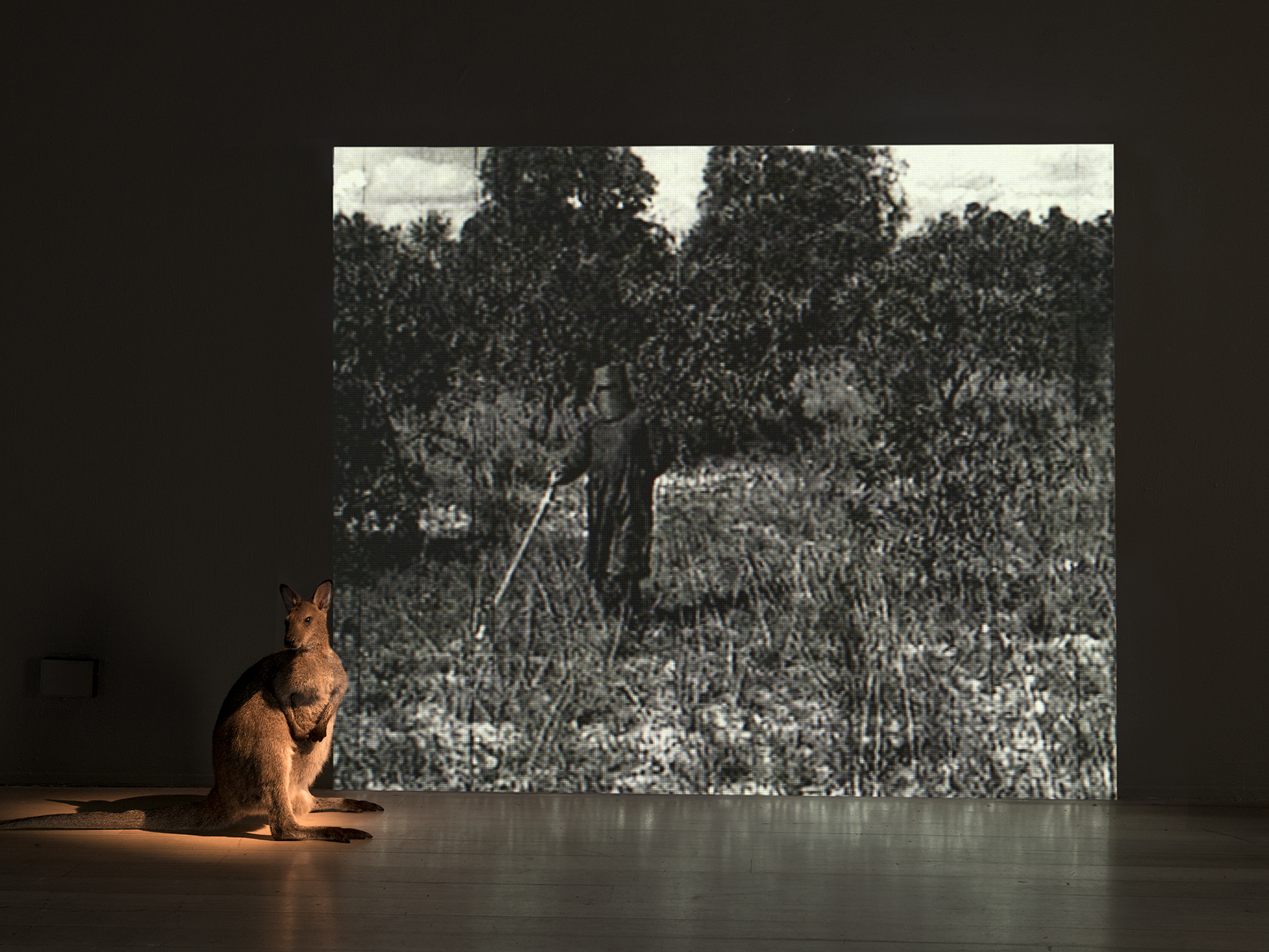
Blind Ned, 1996, video installation with taxidermy, (Red-necked Wallaby), dimensions variable
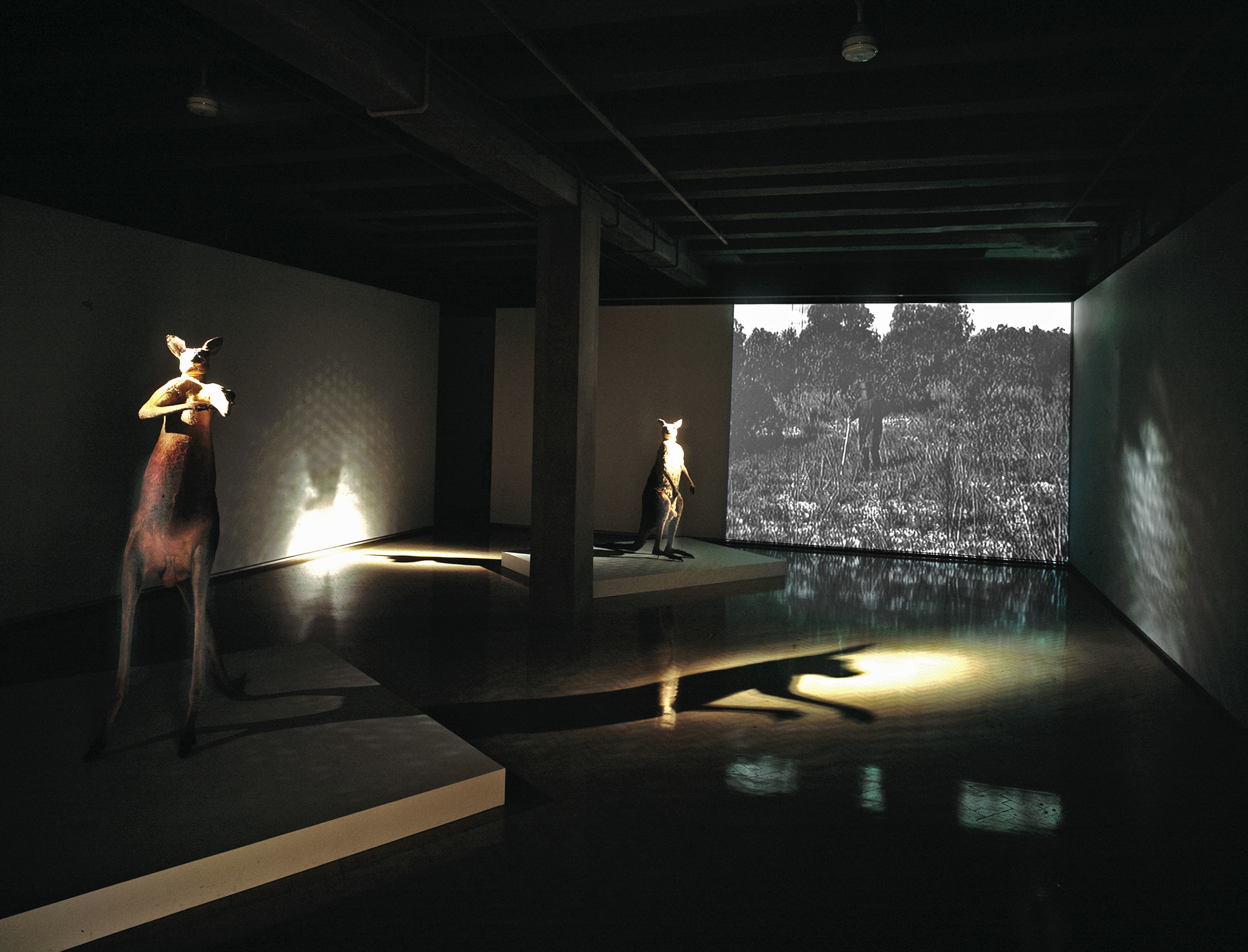
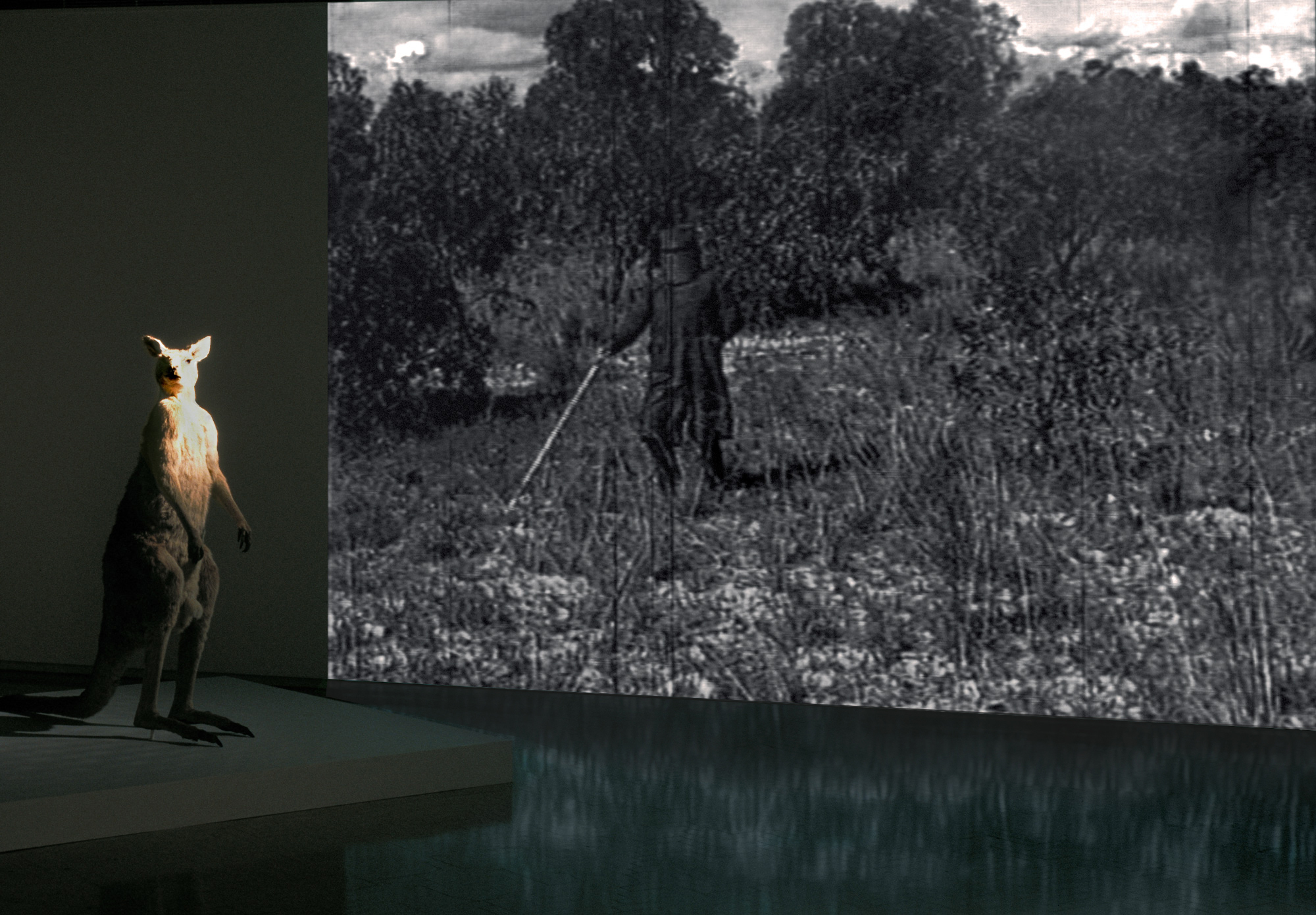
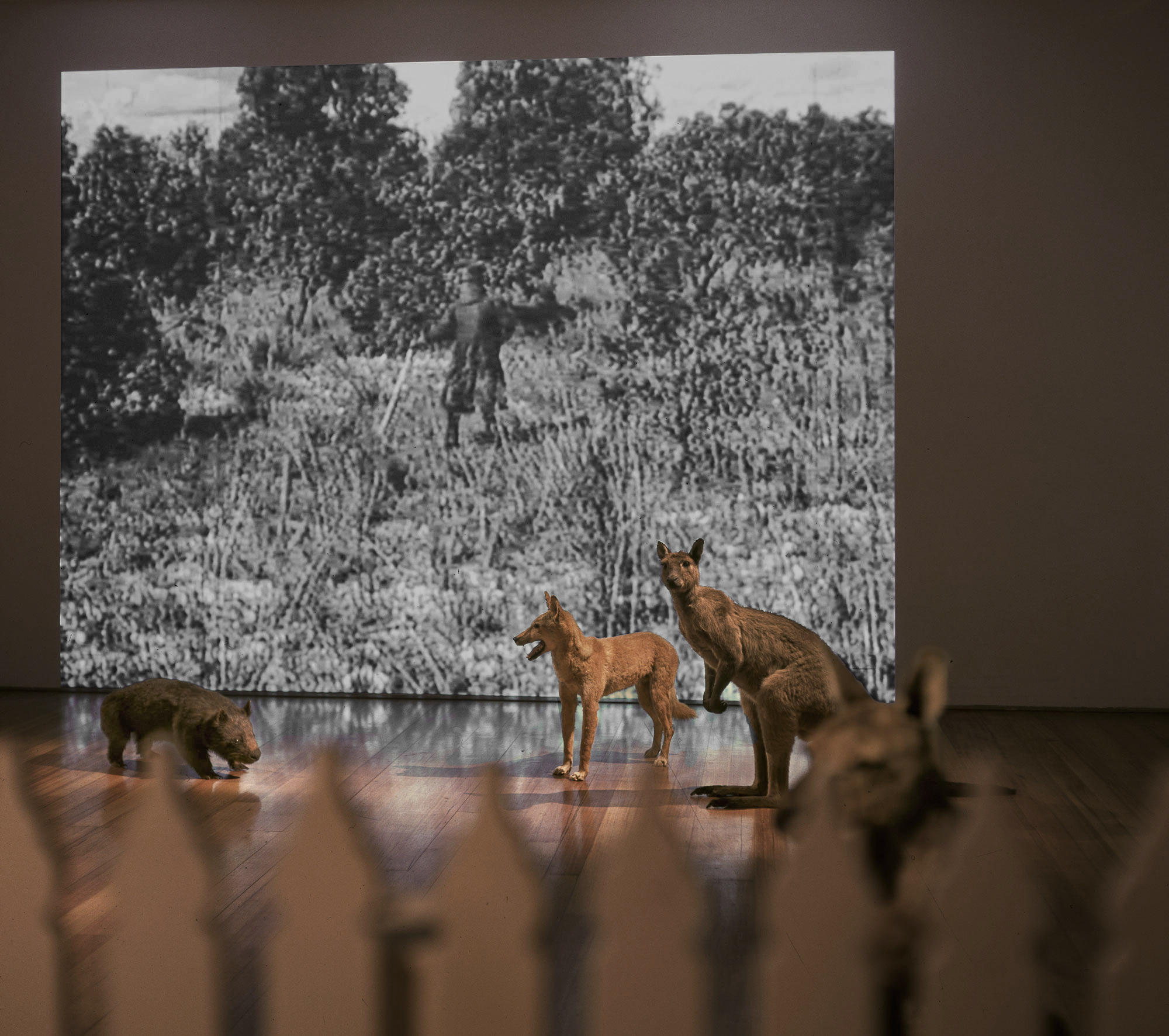
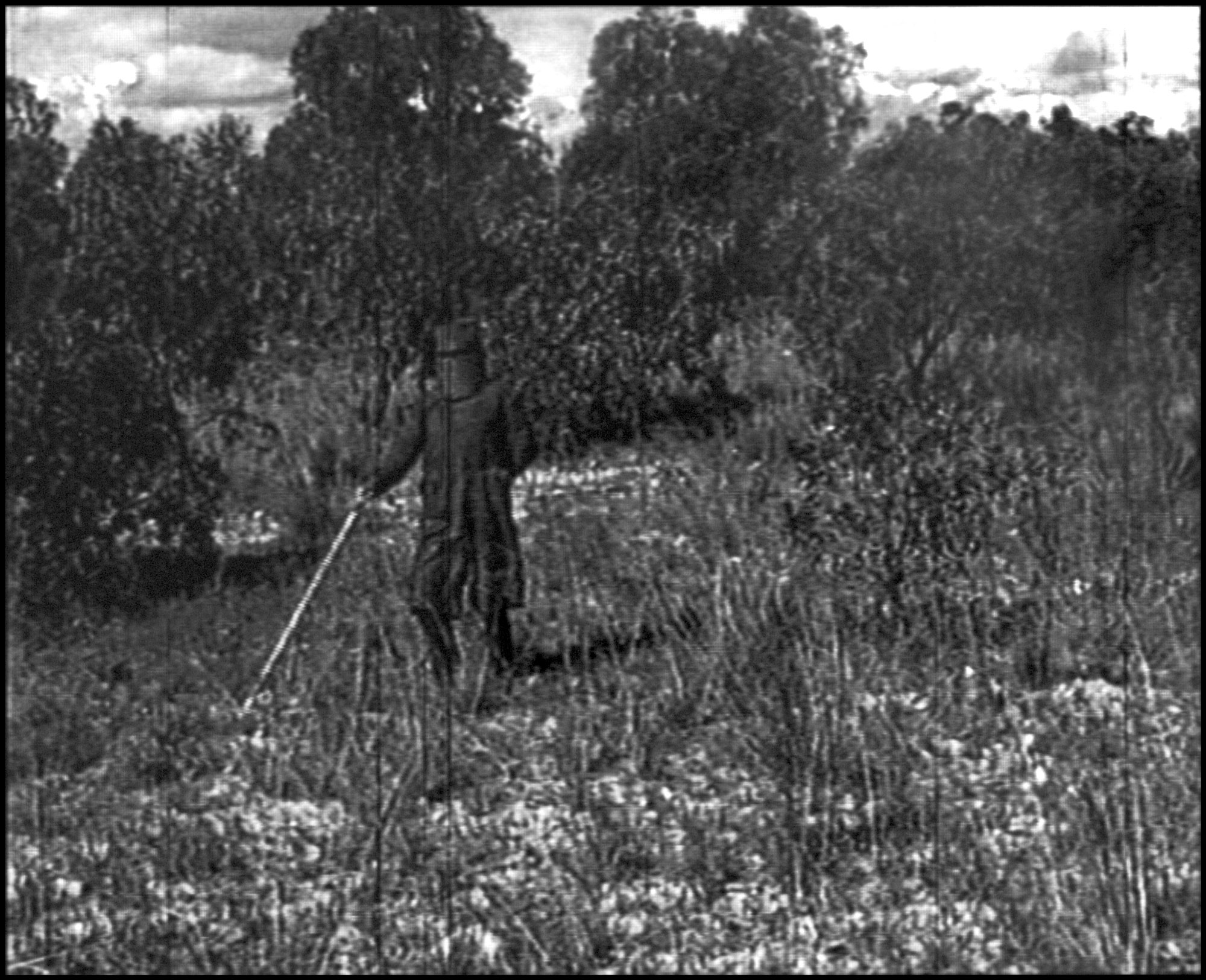
Blind Ned is a short video loop designed to look like a remnant of pre-sound cinema footage, reminiscent of Charles Tait’s Ned Kelly and His Gang (1906), complete with jitters, scratches, and dust particles. A figure, dressed in the unmistakable Ned Kelly style of frock coat and barrel helmet with eye-slit, brandishes a blindman’s cane and makes his way in an ambling zigzag down the screen. The artwork is a simple one-liner, making it an easy choice for curators who prioritise artistic quantity over ideas. The work has understandably been seen as an allegory of Australia’s postcolonial isolation and its need for national symbols; it is also an effective way of satirising our lack of heroes. Ned Kelly is the hero-cum-symbol who, like all national mythical values, has all been divested of any truth or ‘reality’. From Sidney Nolan to, more recently, Peter Carey, Ned Kelly is the embodiment of a vernacular culture. In a deeper sense, and this was what Nolan was strongly aware of in an irony that is generally far too wily for people to see, Ned Kelly is a sorry stand-in for a culture whose only sense of empire was to be subjugated to it, to a culture that had no world reformers or conquerors, only lowly criminals. (And, ironically enough, the recent film that was to launch him into international notoriety was a flop.)
But to take this as the work’s point is to miss the dreamlike atmosphere that pervades it. Aside from its obvious suggestions of national impoverishment, the work is a personal statement on the directionlessness of art, on the incompleteness of the artistic process and the imperfections of transparent artistic expression—curious when you consider that the work has been interpreted with such confidence. Kreckler, like any good artist, knows the difference between a clear message and a simplistic one. Blind Ned, c’est moi! Blindness here is key. Kreckler’s Ned is at one and the same time part of the world and pathetically disjunct. He is, for the artist, an emblem of an ongoing indecipherability of any place. He is, if you wish, against the Australian landscape and hostile to the very idea of a national art, since a national art lays final claim to place, ideology and representation in which all three become as one. For we know that while the Heidelberg School is hailed as the first group of artists to depict Australia accurately, the Australia that they depict is highly selective and, to be made deserving of the title of truth-sayers, they indulged in endless typologising and mythologising. Kreckler’s work, and not just this one, reminds us that any representation is selective, especially when it is uncritical, thus blind, to its patterns of selectiveness.
Blind (leading) the Blind, Adam Gezcy, BroadSheet Volume 35, number 1, pages 51–53