Accident & Process 2012 – 2015
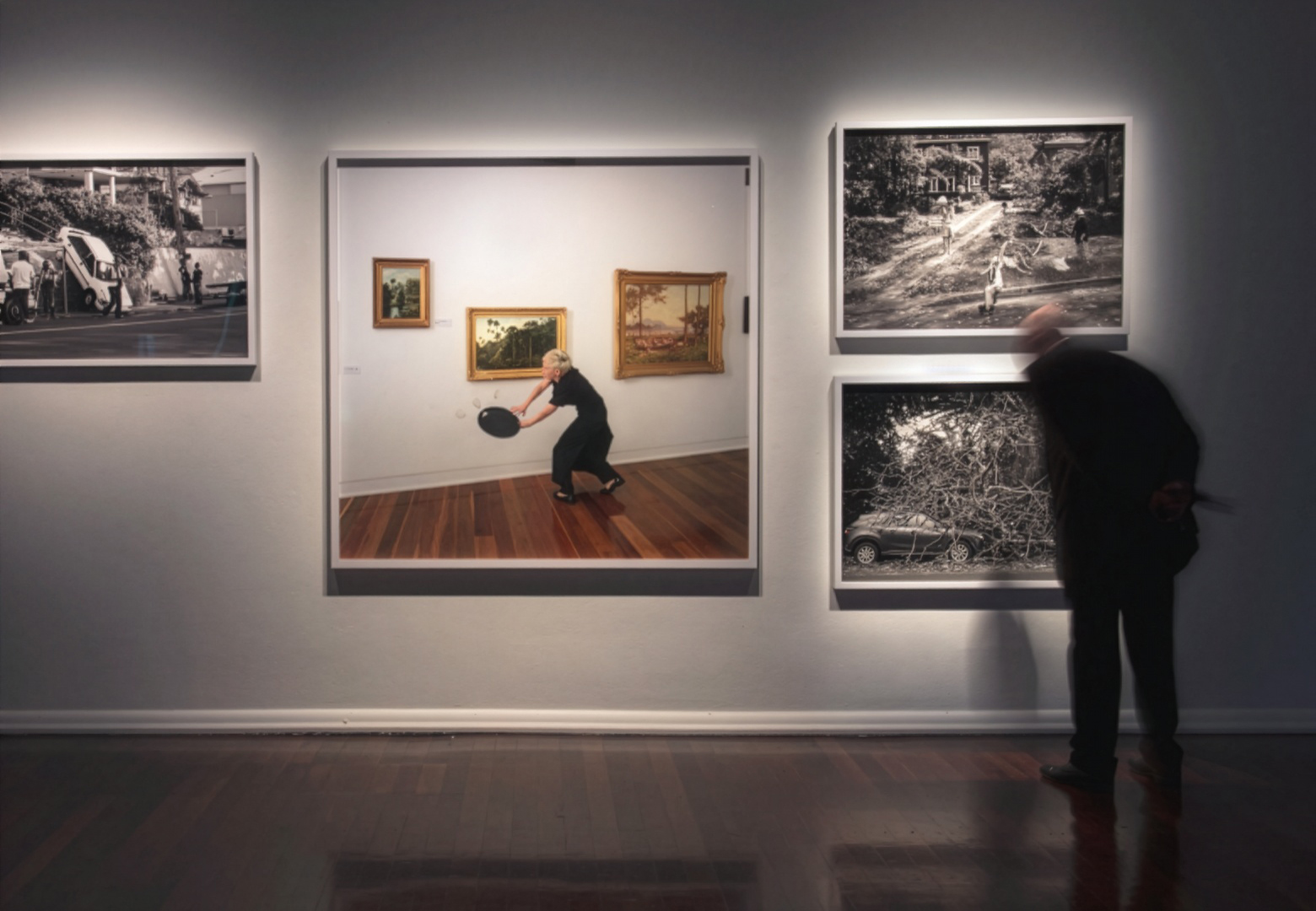
Accident and Process 2012, Perth Institute for Contemporary Arts, 2015.

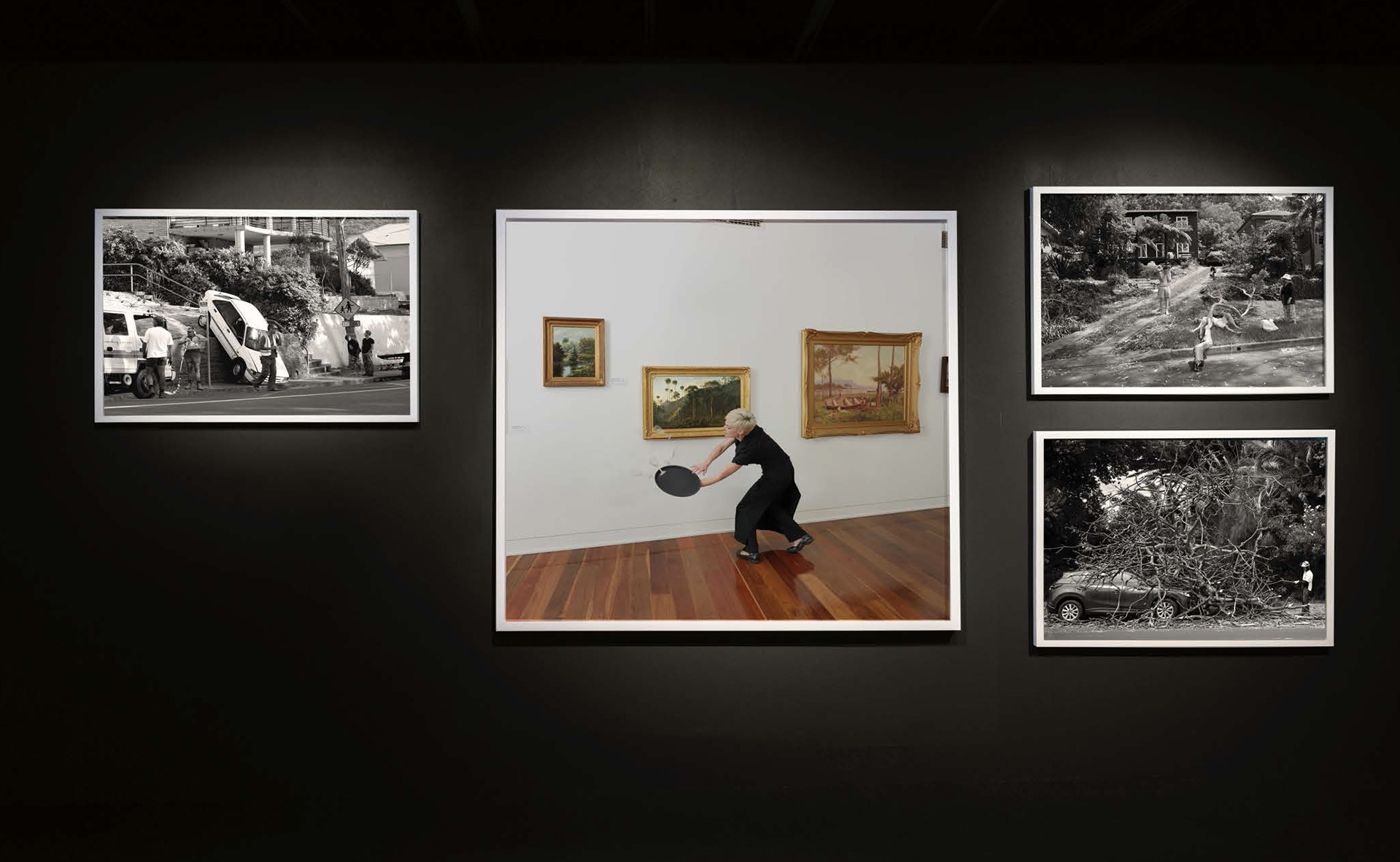
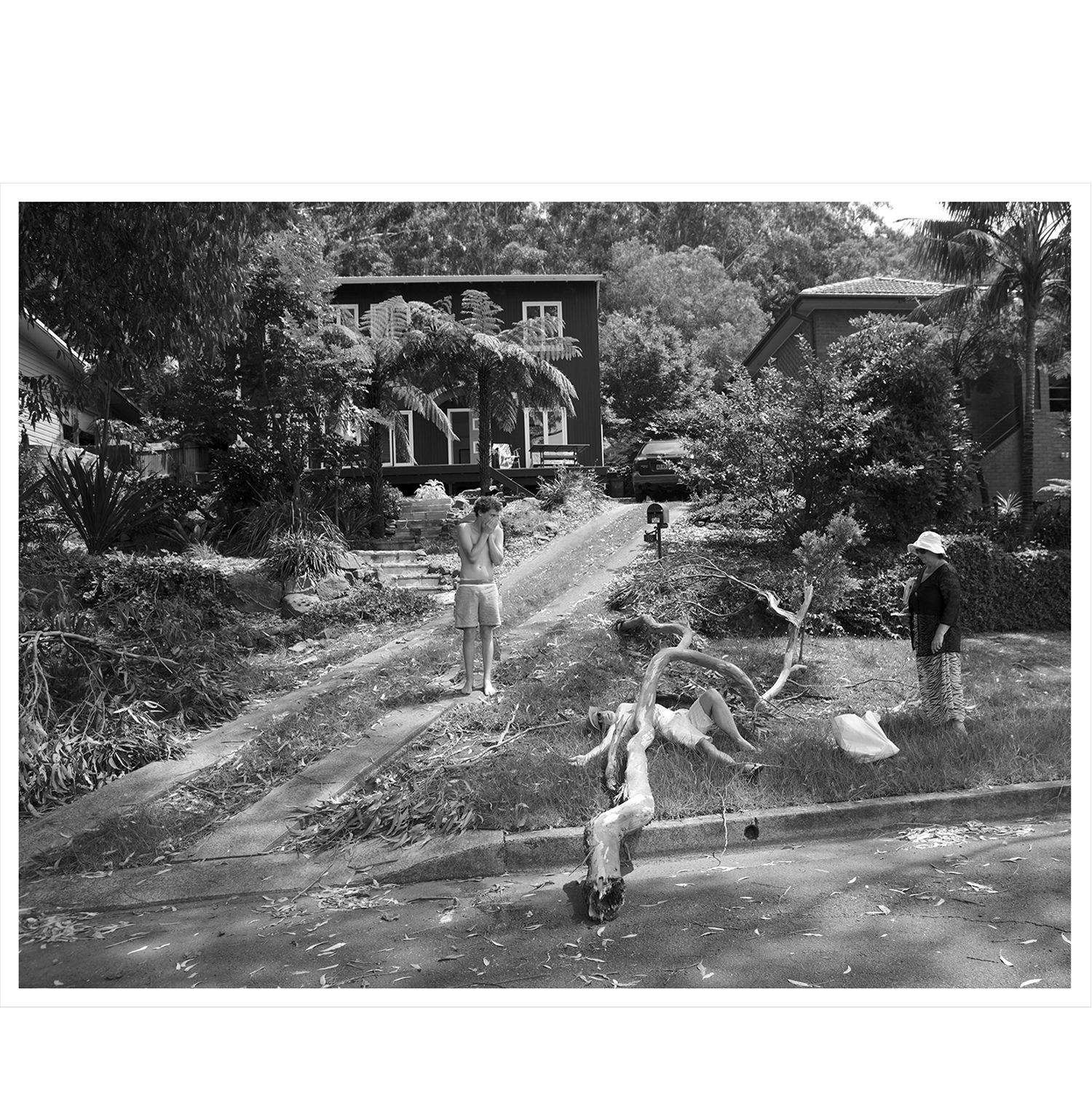
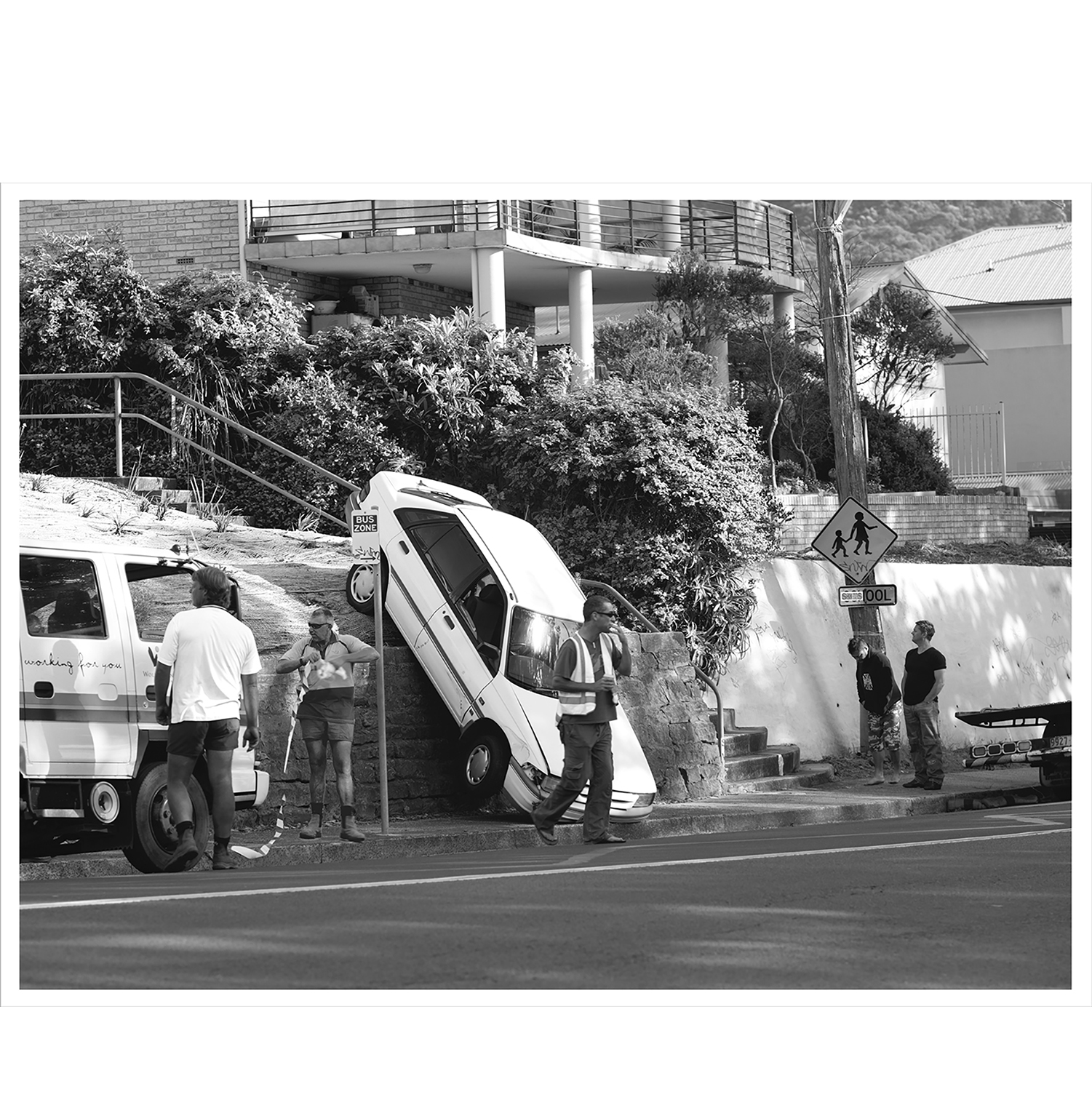
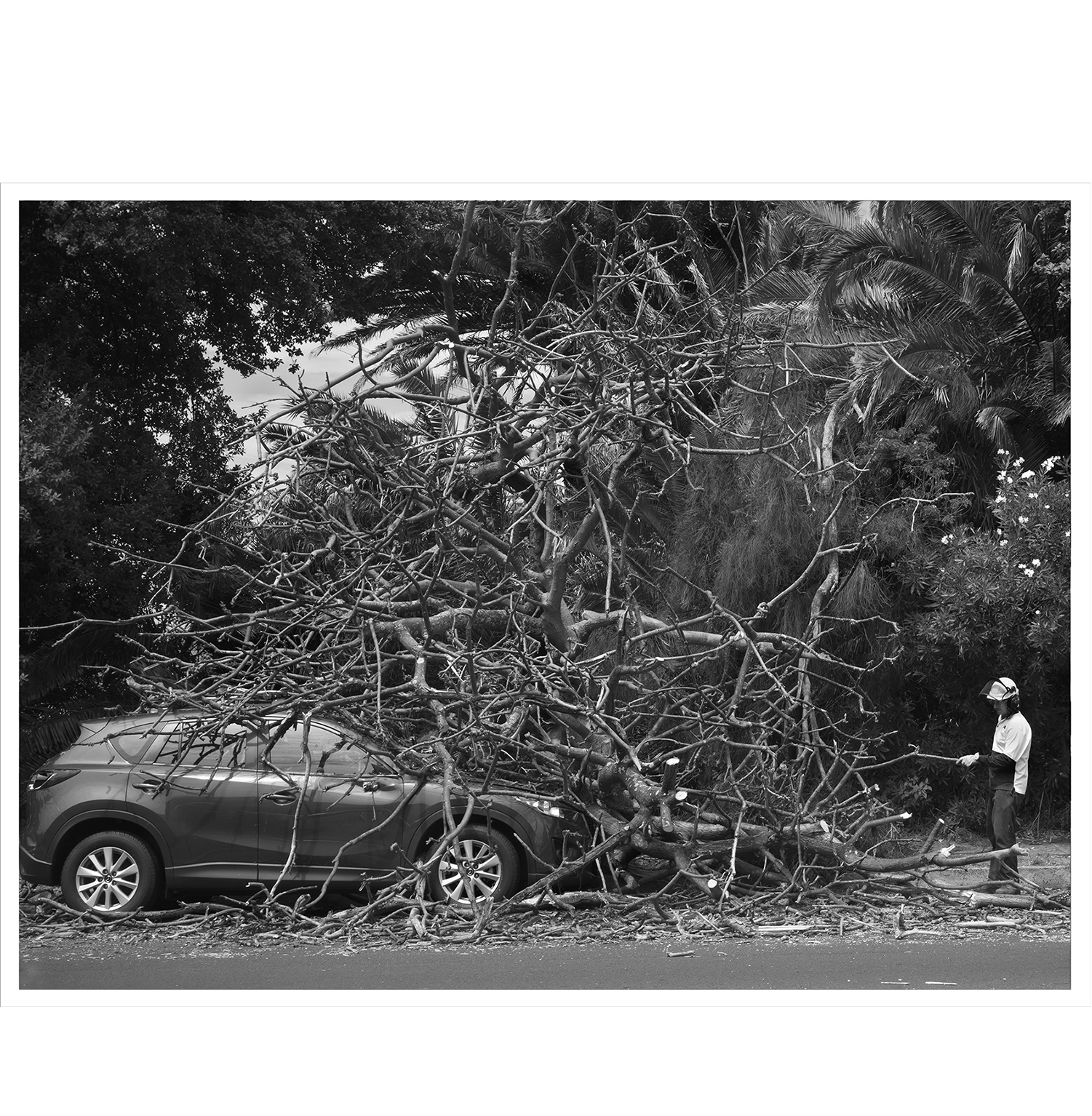
“Many a slip… is another version of a museum photograph. Another painting by von Guérard, Cabbage Trees near the Shoalhaven River (1860), is located directly behind the model, along with other idyllic landscapes (one of them barely indicated at the far left edge of the image, and represented by its label, which is to say, reduced to another form of information). ‘Accident & Process’ presents us with three kinds of photographs of accidents: the digitally-generated fake one in Many a slip…; the ‘real’ (analogue, indexical) photograph of a faked scenario in Document one (tree); and the (presumably) real photograph of a real if confounding accident in Document two (car). By now these all seem equally unstable. So there might be a temptation to say that the real emergency, the event that counts, is to be located in relation to the historical painting —nothing less than a history of the colonial degradation of the landscape and Indigenous people (a history in which von Guérard’s paintings and their like have typically been implicated) — but ‘Appropriated Circumstance’ has already demonstrated that the painting’s status is also mutable. As was the case in Kreckler’s early investigations of performance, the spectator of ‘Accident & Process’ is denied a comfortable line of sight:, it’s all glitch, no system. The work of Many a slip…, in the end, is to foreground the epistemological emergency that is the contemporary condition of photography.”
Frazer Ward, Working For You from ‘Accident&Process’ 2015, ed Talia Linz and Hannah Mathews, Perimeter Editions, Melbourne 2015
“In his early bicycle work, racers circle ungracefully, crashing into each other and finally into a man on crutches carrying a weight behind him. The development of this work sets the tone of Kreckler’s work, which begins simply enough with an elegant premise, yet is frequently (and deliberately) troubled and falls apart, the structure dissolving. The game is interrupted, the rules are changed, and we reach the state that I feel symptomatizes Kreckler’s investigations: absurdity. I feel it is worth mentioning here that humour was also one of the devices of Samuel Beckett’s work. The pointless is often entertaining, and nihilism and laughter are not irreconcilable; meaninglessness is perhaps even conducive to it. Though Kreckler’s work is not nihilistic, there is a definite sense of absurdity, and the implicit loss of meaningfulness within it. Even the presence of chance, wherever it sits in the work (as even that is uncertain), implies that things happen without reason. There is, however, no certainty in where Kreckler’s construction ends and chance begins. The deliberate construction or post-production of accidents, particularly in the documents series, I would interpret as a case in underlining the pointless, just as in Ballard’s Crash, Vaughn seeks to construct the perfect psychosexual automobile accident, to end his life in the metal embrace of Elizabeth Taylor’s car, so Kreckler’s work, somewhere between Ballard’s and Vaughn’s (though usually less malicious), placed people who were not there in the path of accidents he was witness to, or imagined occurring. I am reminded in particular of Vaughn’s various photographic constructions that imagined his death. Our own propensity to imagine our deaths, and the many near misses we can recall, all play into these imaginary, theatrical photos. The rules and games that Kreckler plays all have a tinge of this absurd and existential thought to them. Their interest in repetition, their investment in failure and falling, and of course in accidents, all indicate a vision of the world without precise or logical goals or origins. Kreckler’s work is as indeterminate as the seas that his images often depict.”
Excerpt from Derek Kreckler: Accident and Process, by Graham Mathwin (full article link below)