Fountain 1992
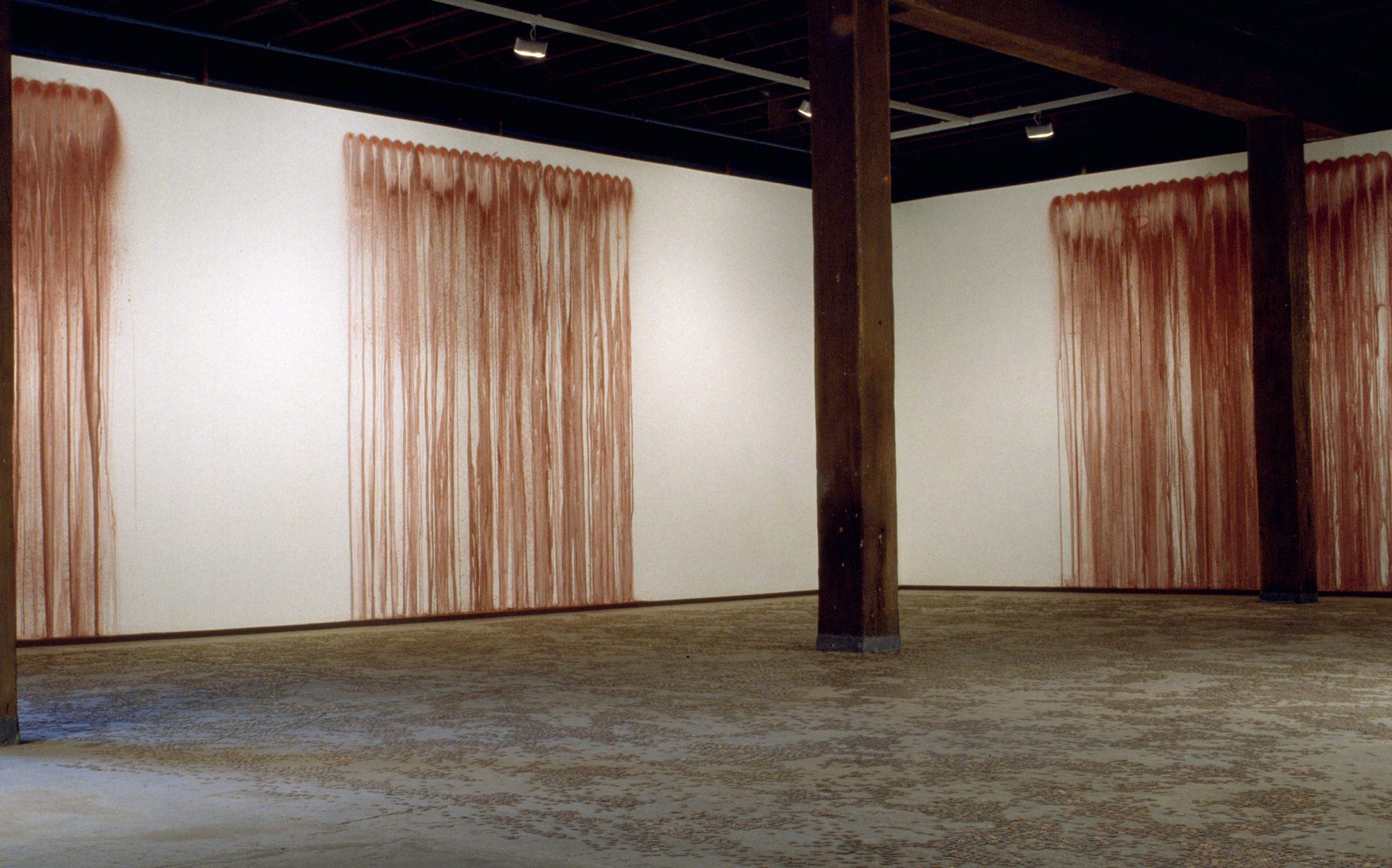
Artspace, Sydney
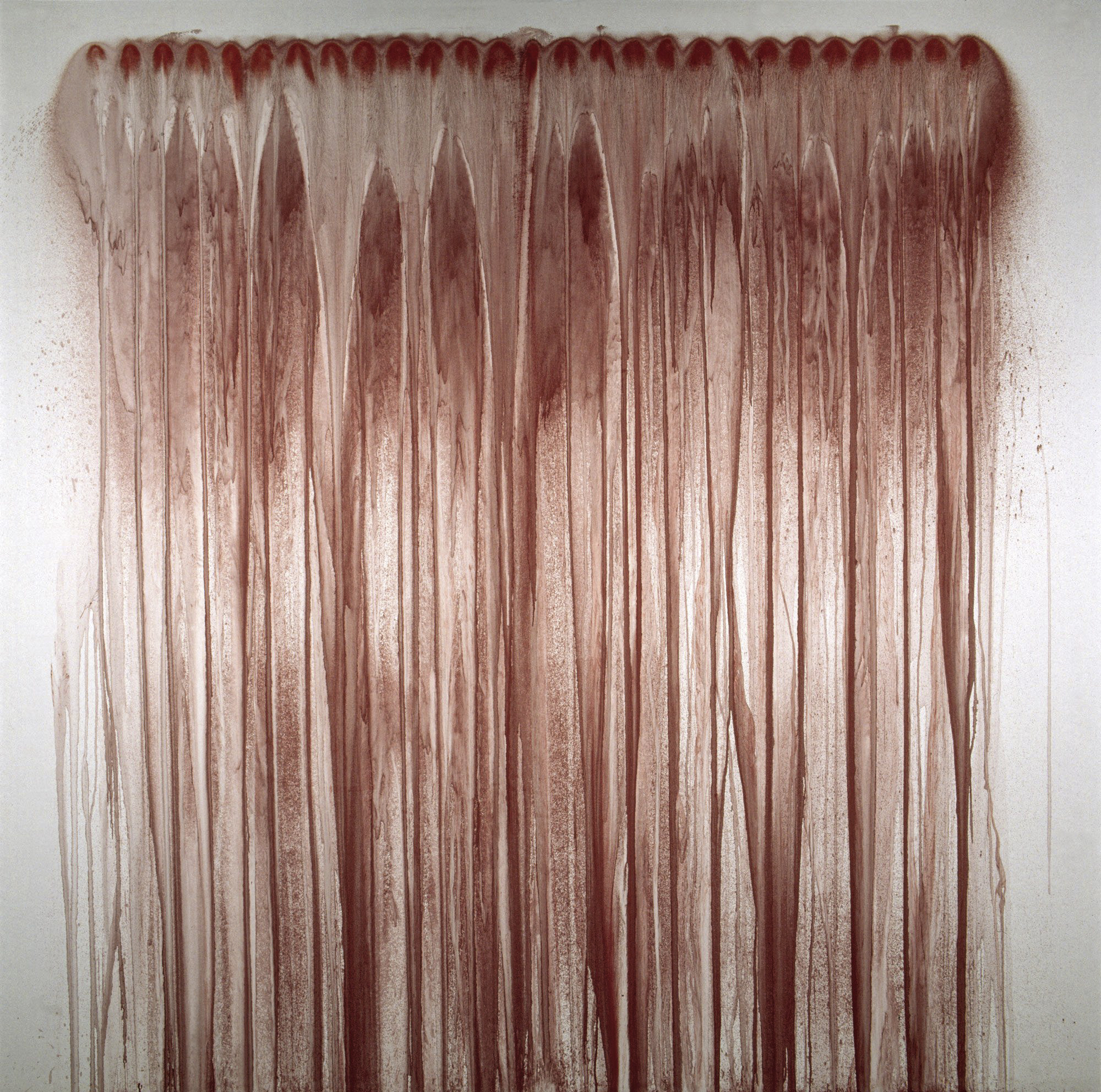
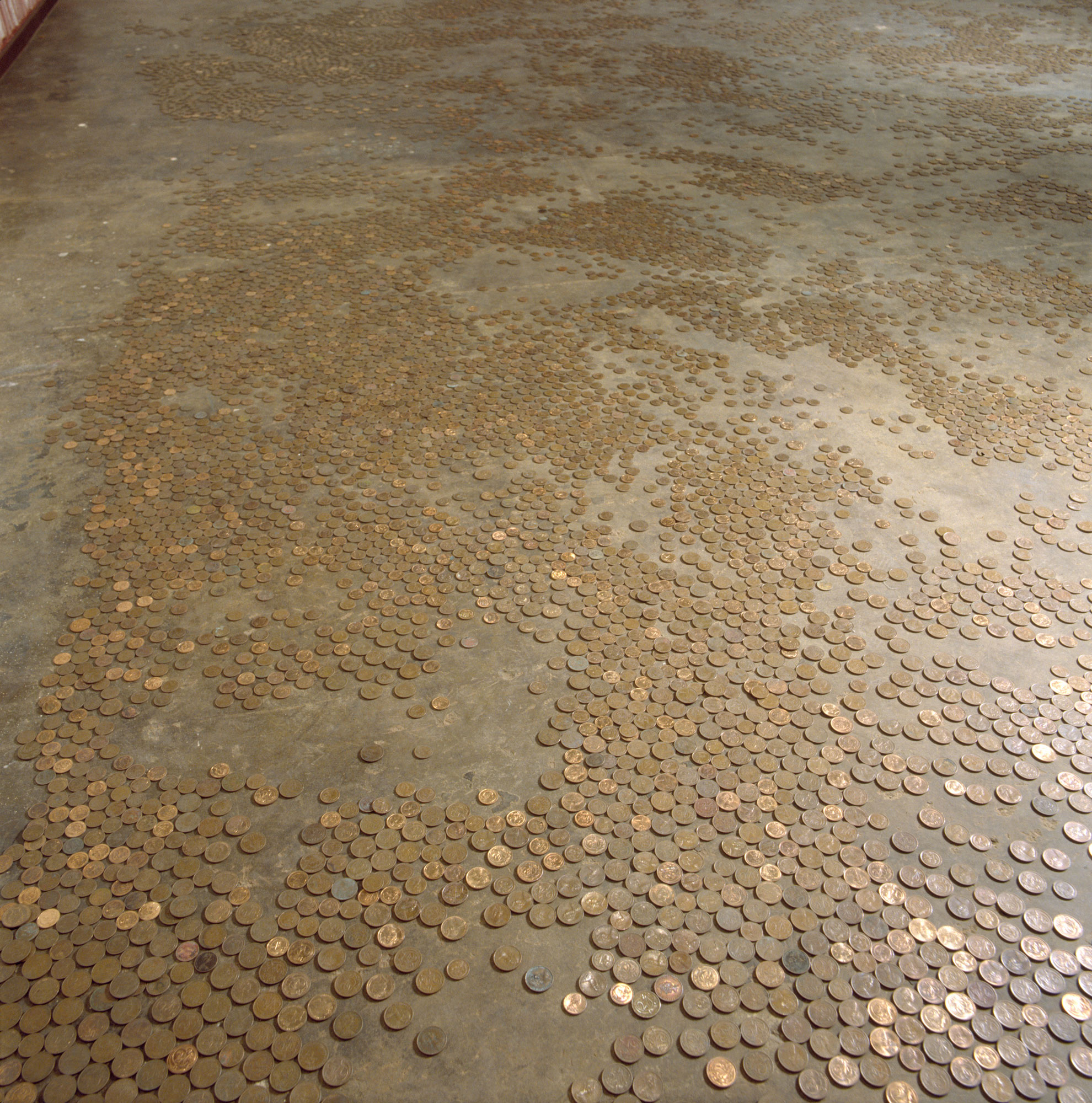
Fountain 1992,
Red ochre, 50,000 one cent and 25,000 two cent coins
A crowd in their Sunday best gathered at the western corner of Circular Quay, watching a few Indigenous children dive for coins, tossed by the audience, from a cluster of wooden ferry pilings. It was September 1968; the harbour water was much clearer then; I could easily see the children swimming a few metres below the surface, fossicking through the seaweed for coins. The racial divide was clear and disturbing. I was 16 and full of myself, judging the onlookers.
In hindsight, I understand the children were using their swimming skills to earn an independent income, a necessity born of an era of systemic disadvantage and poverty. The sharp racial divide of the scene was clear and disturbing. Only a year earlier, the historic 1967 Referendum had overwhelmingly voted to include Aboriginal people in the census, signalling a massive legal shift towards equality. Yet on the ground, daily reality had barely shifted.
In 1990, I was asked to exhibit in a group show for Artspace’s inaugural exhibition at their new Wooloomooloo site. Being on the harbour, I recalled the experience described above and developed Fountain. A few days after the opening, I visited the Gallery. A gallery invigilators poke to me in a hushed, anxious whisper, letting me know that Aboriginal children were inside viewing my work. The conversation lasted barely a minute before five children walked out of the gallery in single file, spaced about two metres apart.
They were entirely silent. Yet, as they moved, it sounded as if they were wearing tap shoes. By the time the last child walked past, the reality of the sound clicked.
I leaned in and asked him, “Hi, what did you use?” He kept walking, looked back at me, and said, “Chewing gum.”